

Travel Insurance Market (2026-2032)
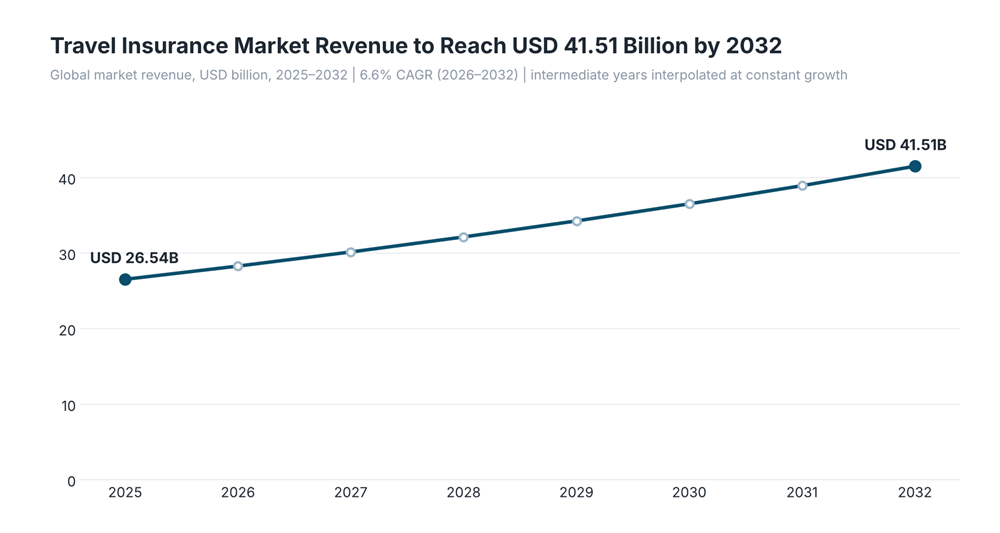
The Global Travel Insurance Market was valued at approximately USD 26.54 billion in 2025 and is projected to reach USD 41.51 billion by 2032, expanding at a CAGR of 6.6% during 2026-2032.



Quick Enquiry
Travel Insurance Market Size, Share, Growth, Competitive Landscape and Forecast, 2026-2032
The Global Travel Insurance Market was valued at approximately USD 26.54 billion in 2025 and is projected to reach USD 41.51 billion by 2032, expanding at a CAGR of 6.6% during 2026-2032, according to MarketsandStats. Approximately 473.35 million travel insurance policies were estimated to have been sold globally in 2025, with annual sales projected to approach 622.9 million policies by 2032. Rising international travel expenditure, greater demand for medical coverage, and the increasing availability of insurance through digital travel booking platforms are supporting premium revenue.
How Are International Tourism, Rising Medical Expenses, and Travel Protection Spending Expanding the Travel Insurance Market?
International travel provides a substantial customer base for insurers. According to UN Tourism, international tourist arrivals reached 1.52 billion in 2025, increasing 4% from 2024. Europe welcomed approximately 793 million international visitors, while Asia Pacific recorded 331 million. Higher international travel activity creates opportunities for insurers to sell medical protection, trip cancellation coverage, and comprehensive travel policies. Expensive vacations and longer international journeys also encourage travelers to purchase higher-value coverage, increasing the premium collected per insured trip.
Comprehensive single-trip insurance represented the largest revenue category in 2025, accounting for approximately 54.4% of global market revenue, equivalent to USD 14.43 billion. Annual multi-trip insurance contributed approximately USD 5.16 billion, while medical-only single-trip policies generated USD 4.33 billion. The United States remained the largest national revenue market, supported by substantial spending on international holidays, cruises, and prepaid travel arrangements.
Why Is the United States the Largest Revenue Contributor to the Travel Insurance Market?
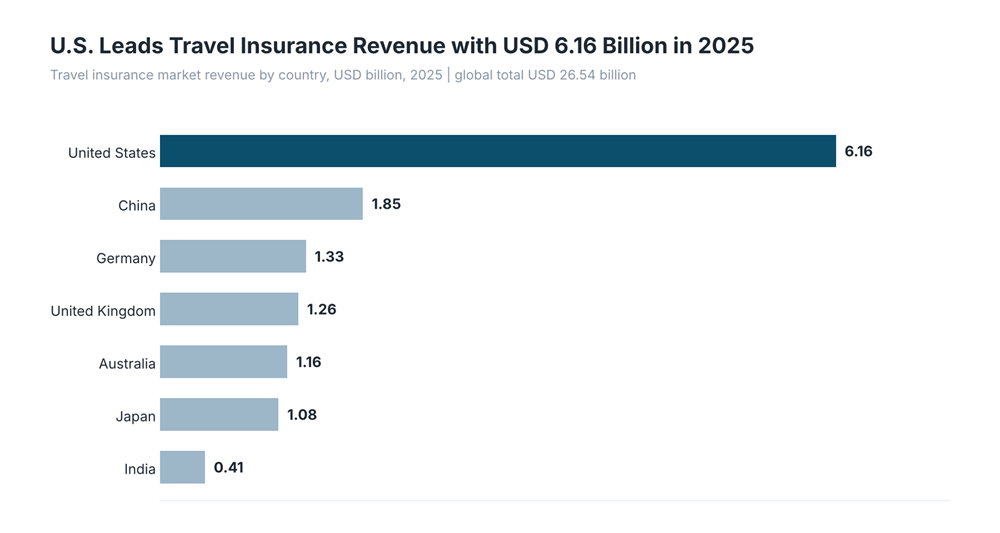
The United States Travel Insurance Market was estimated at approximately USD 6.16 billion in 2025, accounting for nearly 23.2% of global market revenue. An estimated 58 million policies were sold during the year, reflecting strong spending on comprehensive travel protection and trip cancellation insurance. Expensive international vacations, cruise bookings, and nonrefundable travel arrangements encourage consumers to insure a larger portion of their travel expenditure.
According to the U.S. Travel Insurance Association (USTIA), Americans spent approximately USD 5.56 billion on travel protection in 2024, compared with USD 3.81 billion in 2019. More than 54.87 million travel protection plans covered approximately 86.97 million people during 2024. The total value of protected trips reached USD 68.04 billion, compared with USD 49 billion in 2019. Higher insured trip values have increased the importance of cancellation and interruption coverage, particularly among travelers booking expensive holidays several months before departure.
Trip cancellation and interruption packages accounted for approximately 94.7% of U.S. travel protection consumer spending in 2024. These policies often include medical, baggage, and other travel-related benefits alongside cancellation protection. Distribution is also shifting toward digital channels. Between 2022 and 2024, USTIA reported a 46.6% increase in direct-to-consumer business and a 49.4% increase in internet aggregator business. Insurers are gaining additional sales opportunities through their websites, comparison platforms, and booking partnerships.
How Are Medical Claims and Higher Travel Insurance Premiums Affecting Industry Revenue?
Medical coverage has become an important area of insurance spending as travelers seek financial protection against hospitalization, emergency treatment, and medical evacuation abroad. Insurance premiums vary considerably depending on destination, travel duration, traveler age, and coverage benefits. Travelers purchasing comprehensive policies generally pay more than those seeking medical-only protection because the policy also covers cancellation, interruption, and other financial losses.
Squaremouth's 2025 marketplace data indicated that comprehensive travel insurance averaged approximately USD 402 per policy, compared with USD 82 for medical-only coverage. The difference reflects the higher premium value associated with broader protection. In a separate U.S. direct-to-consumer analysis covering April–June 2025, average order value increased 9.7%, from USD 161.92 to USD 177.63. Average gross written premium per insured traveler increased from USD 113.95 to USD 123.78. Travel medical benefit attachment rose from 73.5% to 80.8%, while cancellation benefit attachment declined from 68.8% to 63.0%.
Medical claims also influence underwriting profitability. The Association of British Insurers reported that insurers paid GBP 472 million across more than 500,000 travel insurance claims in 2024. Medical expenses accounted for approximately 34% of claims by number but represented GBP 262 million in payouts, equivalent to nearly 55.5% of total claims payments. The average medical claim payout reached GBP 1,528. The higher financial exposure associated with overseas healthcare makes medical assistance arrangements, claims management, and destination-based premium pricing important competitive considerations for travel insurers.
How Are the United Kingdom and Germany Strengthening Europe's Travel Insurance Premium Base?
Europe remains an important travel insurance region because of frequent cross-border holidays, established insurance purchasing habits, and the popularity of annual multi-trip policies. The United Kingdom Travel Insurance Market was estimated at approximately USD 1.26 billion in 2025. The Association of British Insurers reported GBP 880 million in travel insurance gross written premiums in 2024, demonstrating the scale of insurance spending among British travelers. Overseas medical protection and trip cancellation coverage remain important products, while annual policies generate recurring premium revenue from customers taking several international holidays each year.
The Germany Travel Insurance Market was estimated at approximately USD 1.33 billion in 2025, supported by overseas holidays, cancellation insurance, and travel health coverage. Germany's established tour operator and agency networks provide insurers with access to customers purchasing organized holidays and international travel packages. These arrangements remain commercially important because insurance can be purchased alongside accommodation, transportation, and other prepaid travel services.
HanseMerkur reported that its travel and leisure insurance premium revenue reached EUR 348.8 million in 2025, representing growth of 9.6% over 2024. The company has expanded its relationships with tour operators, online booking platforms, and travel agencies. Its partnership with DERTOUR Group, effective January 2025, covers more than 1,500 owned and affiliated travel agencies in Germany, alongside online distribution and agencies in Switzerland. Such partnerships provide insurers with regular access to travelers and reduce reliance on independently generated insurance sales.
How Are China, Japan, Australia, and India Creating New Travel Insurance Revenue Opportunities?
Asia Pacific is an important region for travel insurance sales, supported by international tourism, rising travel expenditure, and greater access to insurance through online platforms. The China Travel Insurance Market was estimated at approximately USD 1.85 billion in 2025, making it one of the largest national markets in Asia. International holidays, family travel, and growing use of travel booking applications support opportunities for medical coverage and comprehensive insurance. Lower-premium products remain relevant to travelers seeking protection against medical emergencies and common travel disruptions without purchasing extensive coverage.
The Japan Travel Insurance Market was estimated at approximately USD 1.08 billion in 2025. Overseas medical coverage and travel accident insurance remain established product categories, supported by insurance companies, financial institutions, and travel intermediaries. Japan's outbound travel activity provides opportunities for insurers offering short-duration international policies, while currency movements and medical expenses in overseas destinations influence premium pricing. The Australia Travel Insurance Market was estimated at approximately USD 1.16 billion in 2025, with demand supported by international leisure travel and medical protection. Australia's distance from many major travel destinations also increases the importance of overseas emergency assistance and medical evacuation benefits.
India offers opportunities for policy-volume expansion as international leisure travel, overseas education, and digital insurance purchases become more common. The India Travel Insurance Market was estimated at approximately USD 410 million in 2025. Allianz Partners' 2025 Travel Index survey found that 85% of Indian respondents planning to travel expressed an intention to purchase travel insurance. Approximately 43% preferred purchasing insurance through a travel website, compared with 18% directly from an insurance provider. The findings indicate considerable interest in insurance offered during travel bookings, although actual purchases depend on affordability, coverage requirements, and customer preferences.
Which Coverage Types, Policy Categories, and Distribution Channels Lead the Travel Insurance Market?
By Coverage Type, comprehensive travel insurance accounts for the largest share of premium revenue because it combines multiple protections within one policy. Comprehensive single-trip policies generated an estimated USD 14.43 billion in 2025, representing 54.4% of global market revenue. Medical-only single-trip insurance contributed approximately USD 4.33 billion, reflecting demand for overseas hospitalization, emergency treatment, and medical evacuation protection. Other standalone single-trip policies, including limited cancellation, baggage, accident, and travel delay coverage, generated approximately USD 0.99 billion. Comprehensive products benefit from higher premiums per transaction, while medical-only policies attract travelers seeking more affordable coverage.
By Insurance Policy Type, single-trip insurance represented the largest category, generating approximately USD 19.75 billion in 2025, equivalent to 74.4% of global revenue. Single-trip policies remain commercially important because they are commonly purchased for individual holidays, business journeys, and international vacations. Annual multi-trip insurance accounted for approximately USD 5.16 billion, representing 19.4% of market revenue, supported by frequent travelers who prefer one contract covering multiple eligible journeys. Long-stay insurance contributed approximately USD 1.63 billion, serving students, extended overseas visitors, and travelers requiring longer periods of medical and travel protection.
By Distribution Channel, airlines, online travel platforms, and travel agencies represent an important source of insurance sales because customers can purchase protection while booking flights, accommodation, or holiday packages. These channels accounted for an estimated 32% of global premium revenue in 2025. Direct insurance providers represented approximately 25%, supported by insurer websites and customer renewals, while brokers and intermediaries accounted for an estimated 20%. Banks and financial institutions also contribute through payment cards, financial products, and bancassurance arrangements. Digital distribution is attracting insurers seeking access to high volumes of travel transactions without relying exclusively on conventional agency sales.
By End User, leisure travelers represent the largest customer group, supported by international holidays, family vacations, cruise travel, and prepaid tourism packages. Business travelers contribute through frequent international journeys and corporate travel insurance arrangements, while students create demand for longer-duration medical and travel protection. Senior travelers also represent an important customer segment because medical coverage requirements and premiums can be higher for older policyholders. Across these customer groups, trip value, destination, travel frequency, and medical requirements influence the type of insurance purchased and the premium generated.
By Region, North America accounts for a substantial share of global revenue, led by the United States and Canada. Europe benefits from established travel insurance practices and frequent international travel, particularly in Germany, the United Kingdom, and France. Asia Pacific offers opportunities for policy sales expansion in China, India, Japan, South Korea, and Australia. Latin America and the Middle East & Africa represent smaller but developing markets, where international travel activity and partnerships with airlines, banks, and travel agencies provide opportunities to expand insurance distribution.
How Are Airline Partnerships and Online Booking Platforms Changing Insurance Distribution?
Insurance providers are expanding their relationships with airlines and travel booking companies to reach travelers during the purchasing process. Insurance offered alongside flights, cruises, or holiday packages provides a convenient purchasing opportunity and allows travel companies to earn distribution income. For insurers, these partnerships can generate substantial policy volumes, although commission expenses and claims performance remain important factors in determining profitability.
In February 2026, Allianz Partners and Iberia extended their travel insurance partnership for another two years, continuing a relationship established in 2006. Insurance products are offered through Iberia's website, mobile application, booking management services, and check-in process. AXA Partners has also worked with Trip.com to introduce Travel Smart insurance for customers in Hong Kong and Macau. These arrangements illustrate the growing importance of insurance sales through established travel platforms, where purchasing protection can become part of a customer's normal booking process.
Competition between distribution channels is also affecting insurer relationships with customers. Direct sales allow insurance companies to maintain customer contact and manage policy renewals, while travel platforms offer access to travelers who may not independently search for insurance. The commercial value of each channel depends on insurance purchasing rates, customer acquisition costs, average premiums, and the claims experience of policies sold.
Which Companies Are Shaping Competition in the Global Travel Insurance Market?
The Travel Insurance Market includes multinational insurers, specialist travel protection providers, international assistance companies, and insurance intermediaries. Competition is influenced by access to travel distribution networks, underwriting capacity, medical assistance arrangements, product coverage, and claims service performance.
Allianz Partners is a major international provider of travel insurance and assistance services. Its travel business recorded approximately EUR 3.32 billion in business volume during 2024, while Allianz Partners' broader operations generated EUR 10.59 billion in 2025 across travel, health, assistance, and other services. Its airline and travel industry relationships provide access to customers across multiple international markets. The company also benefits from an established assistance network serving travelers requiring emergency support while abroad.
HanseMerkur maintains a strong position in European travel insurance, supported by EUR 348.8 million in travel and leisure insurance premiums during 2025. The company's relationships with tour operators, travel agencies, and booking platforms provide access to customers purchasing holiday packages and international trips. AXA Partners also competes through travel insurance and assistance services, with digital distribution partnerships helping extend its reach across different travel markets.
Chubb participates through travel accident and specialty insurance products distributed through financial institutions, brokers, and travel partners. Its 2025 annual report identifies relationships with 36 airline distribution partners. Other important industry participants include Generali Global Assistance, Zurich Insurance Group, Berkshire Hathaway Travel Protection, Seven Corners, World Nomads, Tata AIG, and ICICI Lombard. These companies compete across different coverage categories and customer groups, with differences in underwriting exposure, distribution relationships, and regional operations.
How Are Medical Inflation, Claims Exposure, and Insurance Regulation Affecting Market Profitability?
Rising medical costs remain a major challenge for travel insurers, particularly for policies covering international hospitalization and emergency treatment. Claims involving serious illness, evacuation, or repatriation can create substantial financial exposure. Insurers must account for destination-specific healthcare expenses and the cost of emergency assistance when setting premiums. Higher claims payments can reduce underwriting margins even when premium revenue increases, making medical cost management an important competitive factor.
Travel disruptions also affect profitability. Severe weather, airline cancellations, geopolitical uncertainty, and unexpected travel restrictions can lead to increased cancellation and interruption claims. Comprehensive insurance providers face greater exposure to these events because their policies cover several financial risks. Competition from lower-priced insurance products can make it difficult to increase premiums sufficiently to offset higher claims costs, particularly among price-sensitive travelers.
Regulation adds further responsibilities for insurers and distributors. In the United States, the National Association of Insurance Commissioners reported that 38 states had enacted the Travel Insurance Model Act as of April 2026. The framework addresses travel insurance sales practices, licensing, and distinctions between insurance products and non-insurance travel protection arrangements. Clear product terms, accurate coverage descriptions, and effective oversight of distribution partners remain important for companies operating across multiple insurance markets.
Analyst Commentary
"The next competitive advantage in travel insurance will come from improving policy attachment rates without increasing distribution costs or claims exposure. Insurers that price medical risks accurately and offer coverage suited to different trip values will be better positioned to protect underwriting margins. Embedded insurance offers considerable sales potential, but profitability will increasingly depend on commission structures, claims severity, and the premium earned from each insured booking."