
Research Focus: Oncology therapeutics, ADC pipelines, biopharma strategy, clinical development and technology platforms
Editorial Scope: This article is intended for pharmaceutical executives, business-development teams, investors, researchers, manufacturers and other industry participants evaluating the changing antibody-drug conjugate landscape. It is informational market and pipeline analysis and is not intended as medical advice or a substitute for clinical decision-making.
Research Methodology on Antibody-Drug Conjugate (ADC) Pipeline
This analysis was developed through a structured review of FDA approval records and prescribing information, FDA oncology approval notifications, ClinicalTrials.gov registrations, company R&D pipelines, clinical-trial disclosures, investor communications, peer-reviewed publications and transaction announcements.
Greater weight was given to regulatory records and registered clinical-trial information for approval status, indications and trial design. Company disclosures were used primarily to assess development strategy, pipeline breadth, collaborations, transaction activity and recently reported trial results. Pipeline programs were prioritized according to clinical stage, regulatory status, indication breadth, target differentiation and their potential strategic importance within the ADC field.
Because ADC development is changing rapidly, regulatory and clinical-stage references should be interpreted as a September 21, 2026 snapshot rather than a permanent product list.
The analytical sections labelled as Commercial Interpretation distinguish commercial interpretation from regulatory or clinical facts.
Executive Perspective: What Is Changing in the ADC Industry?
Antibody-drug conjugates are no longer developing as a collection of isolated oncology medicines. The competitive landscape increasingly resembles a platform race involving validated and emerging targets, reusable linker-payload architectures, companion diagnostics, manufacturing capabilities and large multi-indication clinical-development programs.
Three changes are particularly important.
First, established ADCs are migrating from heavily pretreated metastatic disease into first-line, perioperative and early-stage settings. Enhertu received two additional U.S. early-stage HER2-positive breast cancer indications in May 2026, while the Padcev-pembrolizumab regimen expanded further into perioperative muscle-invasive bladder cancer in July 2026.
Second, competition is moving beyond target discovery. HER2 and TROP2 demonstrate that once an antigen becomes clinically validated, differentiation increasingly depends on payload chemistry, linker stability, drug-to-antibody ratio, treatment setting, biomarker selection and combination strategy.
Third, emerging targets are beginning to face decisive clinical tests. B7-H3, CDH6, HER3, ROR1, CLDN18.2, FRα, SEZ6, integrin beta-6 and other targets are progressing through clinical development, creating a broader question for the industry: which targets can support repeatable multi-indication ADC franchises rather than single-product opportunities?
What Changed in the ADC Landscape During 2026?
Several developments during 2026 materially changed the competitive picture.
ADCs moved earlier in the treatment pathway
On May 15, 2026, the FDA approved Enhertu in two HER2-positive early-stage breast cancer settings, including neoadjuvant treatment for Stage II or III disease and adjuvant treatment for patients with residual invasive disease following neoadjuvant HER2-targeted therapy.
On July 10, 2026, the FDA expanded perioperative pembrolizumab plus Padcev use to adults with muscle-invasive bladder cancer who are candidates for cystectomy, extending the regimen beyond the earlier cisplatin-ineligible population.
TROP2 competition intensified
Datroway gained another U.S. indication on May 22, 2026, for certain patients with unresectable or metastatic triple-negative breast cancer who are not candidates for PD-1/PD-L1 inhibitor therapy.
Trodelvy received two first-line TNBC approvals on June 24, 2026: monotherapy for patients not suited to PD-1/PD-L1 therapy and a pembrolizumab combination for PD-L1-positive disease.
Merck's sacituzumab tirumotecan program has meanwhile expanded to 17 ongoing global Phase III trials, spanning more than nine disease areas and more than 15,000 patients.
New ADC targets moved closer to validation
Ifinatamab deruxtecan, targeting B7-H3, received FDA Priority Review for previously treated extensive-stage small-cell lung cancer. Its PDUFA date is October 10, 2026.
AstraZeneca also reported positive Phase III overall-survival results for sonesitatug vedotin, a CLDN18.2-directed ADC, in second- and later-line advanced gastric/GEJ cancers in July 2026.
Not every ADC expansion strategy succeeded
Merck and Gilead discontinued the Phase III KEYNOTE-D46/EVOKE-03 study in June 2026 after Trodelvy plus pembrolizumab produced a numerical PFS improvement that did not reach statistical significance in the studied NSCLC population.
Pfizer also reported that sigvotatug vedotin did not significantly improve overall survival versus docetaxel in the overall population of the Phase III SigVie-002 study, although other development programs continue.
Commercial Interpretation
These developments suggest that 2026 is not simply another year of ADC pipeline expansion. It is becoming a year of clinical separation.
Established ADCs are proving that successful products can migrate earlier in treatment. At the same time, negative Phase III outcomes are showing that neither target expression nor combination with immunotherapy automatically guarantees a commercially viable result.
For companies evaluating ADC investment, the question is increasingly less about whether a target is biologically interesting and more about whether the complete drug architecture and development strategy can generate clinically meaningful differentiation in the intended treatment setting.
Antibody-drug conjugates (ADCs) have moved from a specialized oncology technology to one of the most important drug-development platforms in cancer treatment. Their appeal lies in a relatively straightforward concept: combine the targeting ability of an antibody with a highly potent anti-cancer payload and use the antibody to concentrate that payload in cells expressing a selected antigen.
The commercial and clinical implications are much broader. ADC development now brings together antibody engineering, linker chemistry, payload discovery, biomarker testing, companion diagnostics, manufacturing, clinical development and combination therapy. Success therefore depends not simply on identifying another cancer-associated antigen, but on optimizing the entire antibody-linker-payload system.
The regulatory landscape has also expanded rapidly. Established products such as Adcetris, Kadcyla, Padcev, Enhertu and Trodelvy have been joined by newer therapies including Datroway, Emrelis and Decnupaz, while older products such as Blenrep have returned to the U.S. market under new treatment regimens. During 2026 alone, the FDA expanded indications for several established ADCs and approved pivekimab sunirine-pvzy for BPDCN, highlighting how the category is moving simultaneously into new targets, earlier treatment settings and combination regimens.
At the same time, the investigational pipeline is becoming more competitive. B7-H3, HER3, CDH6, ROR1 and next-generation TROP2 programs are progressing through late-stage development, while companies are experimenting with new payloads, improved linkers, combination regimens and more sophisticated conjugation strategies.
The key question is therefore changing from “Do ADCs work?” to “Which ADC architectures, targets and development strategies can create the next major therapeutic platforms?”
What Are Antibody-Drug Conjugates?
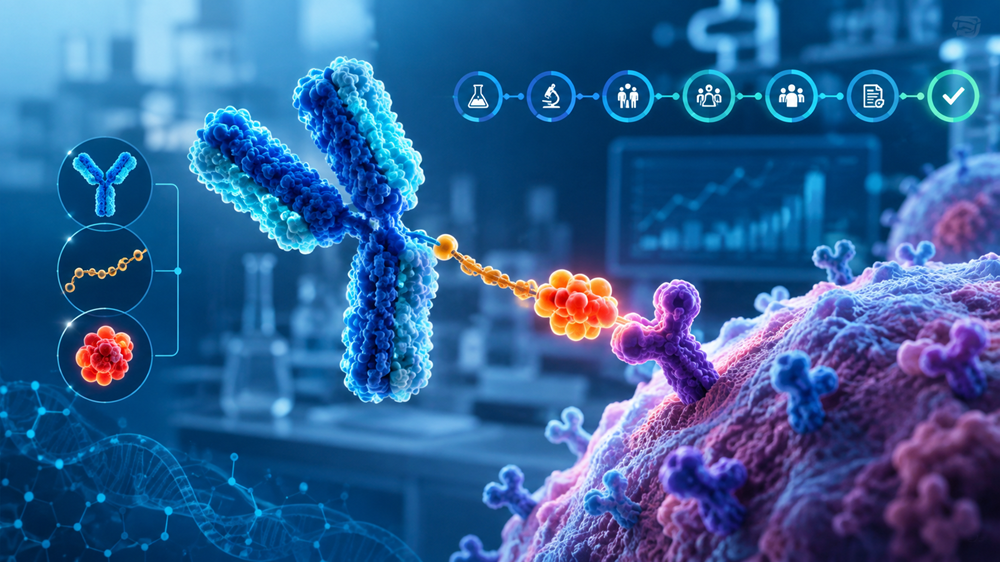
An antibody-drug conjugate is a targeted therapeutic system built around three interconnected components: a monoclonal antibody, a linker and a drug payload.
The antibody recognizes an antigen expressed on the surface of a cancer cell. The linker connects that antibody to the payload and is designed to remain sufficiently stable during circulation while releasing the drug under appropriate biological conditions. The payload provides the cell-killing activity and can be considerably more potent than conventional chemotherapy agents.
After the ADC binds to its target antigen, the antibody-antigen complex is generally internalized. Intracellular processing then releases the payload, allowing it to interfere with processes such as microtubule assembly or DNA replication and ultimately kill the targeted cell.
This architecture explains both the opportunity and the difficulty of ADC development. Changing the antibody, linker, payload, drug-to-antibody ratio or conjugation method can alter pharmacokinetics, safety, tumor penetration and therapeutic activity. An ADC is therefore better viewed as an engineered drug-delivery platform than simply as an antibody carrying chemotherapy.
Why Have ADCs Become So Important in Oncology?
Traditional cytotoxic chemotherapy can be highly effective but lacks tumor selectivity. ADCs attempt to improve that therapeutic equation by concentrating potent molecules in antigen-expressing cancer cells.
The technology has progressed substantially since the earliest products. Modern ADC programs increasingly use more stable linkers, potent topoisomerase-I inhibitor payloads, higher or more controlled drug loading, improved conjugation approaches and designs capable of generating a bystander effect, in which released payload can also affect neighboring tumor cells.
That last characteristic is commercially important. Tumors are heterogeneous: not every cancer cell necessarily expresses a target at the same level. An ADC capable of affecting adjacent cells can potentially remain active even where antigen expression varies within the tumor.
Clinical development has consequently moved well beyond the original concentration in hematologic malignancies. Breast cancer, urothelial cancer, ovarian cancer, cervical cancer, gastric cancer and lung cancer are now major areas of ADC use or development, while new programs are investigating prostate, endometrial, esophageal and other solid tumors.
FDA-Approved ADC Landscape
The U.S. ADC landscape now spans hematologic malignancies and a growing range of solid tumors. The following table focuses on major currently marketed FDA-approved antibody-drug conjugates or closely classified antibody-payload conjugates.
| ADC | Target | Major U.S. oncology role | Company / developer |
|---|---|---|---|
| Mylotarg (gemtuzumab ozogamicin) | CD33 | Acute myeloid leukemia | Pfizer |
| Adcetris (brentuximab vedotin) | CD30 | Hodgkin lymphoma and other CD30-positive lymphomas | Pfizer/Seagen, Takeda |
| Kadcyla (ado-trastuzumab emtansine) | HER2 | HER2-positive breast cancer | Roche/Genentech |
| Besponsa (inotuzumab ozogamicin) | CD22 | B-cell precursor acute lymphoblastic leukemia | Pfizer |
| Polivy (polatuzumab vedotin) | CD79b | Diffuse large B-cell lymphoma | Roche/Genentech |
| Padcev (enfortumab vedotin) | Nectin-4 | Urothelial cancer; use has expanded into perioperative muscle-invasive bladder cancer with pembrolizumab | Astellas/Pfizer |
| Enhertu (fam-trastuzumab deruxtecan) | HER2 | Breast, gastric, lung and HER2-positive solid tumors; expanded into early HER2-positive breast cancer in 2026 | Daiichi Sankyo/AstraZeneca |
| Trodelvy (sacituzumab govitecan) | TROP2 | Triple-negative and HR-positive/HER2-negative breast cancer; expanded into first-line metastatic TNBC in 2026 | Gilead Sciences |
| Blenrep (belantamab mafodotin) | BCMA | Relapsed or refractory multiple myeloma in combination with bortezomib and dexamethasone | GSK |
| Zynlonta (loncastuximab tesirine) | CD19 | Relapsed or refractory diffuse large B-cell lymphoma | ADC Therapeutics |
| Tivdak (tisotumab vedotin) | Tissue factor | Recurrent or metastatic cervical cancer | Genmab/Pfizer |
| Elahere (mirvetuximab soravtansine) | FRα | FRα-positive platinum-resistant ovarian, fallopian tube or primary peritoneal cancer | AbbVie |
| Datroway (datopotamab deruxtecan) | TROP2 | HR-positive/HER2-negative breast cancer, EGFR-mutated NSCLC and, since May 2026, certain patients with metastatic TNBC | Daiichi Sankyo/AstraZeneca |
| Emrelis (telisotuzumab vedotin) | c-Met | Previously treated non-squamous NSCLC with high c-Met protein overexpression | AbbVie |
| Decnupaz (pivekimab sunirine) | CD123 | Adult blastic plasmacytoid dendritic cell neoplasm | AbbVie |
The newer entries highlight the accelerating diversification of ADC targets. Emrelis received accelerated approval for high c-Met-overexpressing non-squamous NSCLC in May 2025, while Decnupaz was approved for adult BPDCN on May 27, 2026.
Older ADC lists may also include Lumoxiti (moxetumomab pasudotox). AstraZeneca permanently withdrew the product from the U.S. market in 2023 because of low clinical uptake rather than a new safety or efficacy finding.
This changing roster illustrates an important point: ADC progress is no longer measured only through first approvals. Label expansion is becoming equally important. Companies are attempting to move validated ADCs into earlier treatment lines, additional cancer types and combination regimens.
ADC Target-Maturity Map
The competitive value of an ADC target should not be assessed simply by counting the number of molecules attached to it. A more useful framework considers regulatory validation, competitive density, indication breadth and remaining differentiation potential.
| Target | Current maturity | Competitive situation | Strategic interpretation |
|---|---|---|---|
| HER2 | Established, multi-indication | High | Benchmark for how an ADC target can expand across tumor types and treatment lines |
| TROP2 | Established, rapidly expanding | Very high | Differentiation increasingly depends on architecture and clinical positioning rather than target novelty |
| Nectin-4 | Validated | Moderate | Padcev demonstrates potential for earlier-line and perioperative expansion |
| FRα | Validated in ovarian cancer | Increasing | Biomarker selection and payload differentiation remain important |
| BCMA | Validated in hematology | High therapeutic competition | Must compete with bispecific antibodies, CAR-T and other BCMA modalities |
| c-Met | Newly validated for ADC use | Emerging | Companion diagnostics may be central to commercial adoption |
| B7-H3 | Late-stage / regulatory-review stage | Increasing | One of the clearest candidates for the next broadly validated ADC target |
| CLDN18.2 | Late-stage | Increasing | Phase III success strengthens gastrointestinal oncology opportunity |
| HER3 | Late-stage | Moderate | Commercial value depends on translating broad expression into consistent efficacy |
| CDH6 | Late-stage | Relatively concentrated | Could establish a differentiated ovarian-cancer ADC opportunity |
| ROR1 | Late-stage in hematology | Moderate | Must demonstrate advantage in an increasingly crowded hematologic landscape |
| Integrin beta-6 | Late-stage | Emerging | Mixed Phase III evidence means patient selection and setting will be critical |
| SEZ6 | Advancing | Early competitive development | Particularly relevant to SCLC if later-stage evidence validates early responses |
| B7-H4 | Earlier clinical development | Emerging | Potentially relevant in gynecologic tumors but remains less clinically validated |
Industry Interpretation
The maturity map suggests that there are now three distinct ADC competitive models.
The first is the validated-target race, represented by HER2 and TROP2, where the market opportunity is large but competitors must outperform increasingly established standards.
The second is the target-validation race, represented by B7-H3, CLDN18.2, CDH6, HER3 and ROR1. Here, successful pivotal data can materially increase the strategic value of both the drug and the underlying target class.
The third is the platform discovery race, where companies use emerging antigens such as SEZ6 or B7-H4 to demonstrate that their ADC architecture can unlock new disease areas.
This distinction matters because the commercial risk profile differs substantially between developing a better ADC against an established antigen and attempting to establish an entirely new target.
How Is HER2 Continuing to Shape the ADC Market?
HER2 remains the clearest demonstration of how an ADC target can develop into a multi-indication franchise.
Kadcyla established HER2-directed ADC therapy in breast cancer, but Enhertu changed expectations for what an ADC could achieve. Its design incorporates a topoisomerase-I inhibitor payload and a cleavable linker, with a relatively high drug-to-antibody ratio and a bystander effect that helped broaden development beyond traditional HER2-high disease.
The commercial significance now extends well beyond metastatic breast cancer. In May 2026, the FDA approved Enhertu for two additional HER2-positive early breast cancer settings: a neoadjuvant regimen for Stage II or III disease and an adjuvant indication for patients with residual invasive disease following neoadjuvant HER2-targeted and taxane treatment.
Lung cancer is another important frontier. In September 2026, AstraZeneca and Daiichi Sankyo reported that the Phase III DESTINY-Lung04 study produced a median progression-free survival of 14.3 months with Enhertu versus 8.3 months for pembrolizumab plus platinum-pemetrexed chemotherapy in first-line HER2-mutant advanced non-squamous NSCLC. The reported hazard ratio for progression or death was 0.63, while the objective response rate was 70.0% versus 44.5%. Overall-survival follow-up continues.
The strategic implication is significant: successful ADCs can evolve from late-line salvage treatments toward earlier-stage and potentially curative-intent settings. That increases eligible patient populations while also raising the evidence bar for safety, tolerability and long-term benefit.
Why This Matters Commercially
HER2 provides an important model for ADC business development because value creation has come from more than a single approval. The same target has supported different tumor types, biomarker thresholds, disease stages and treatment settings.
This suggests that the lifetime commercial potential of an ADC asset may be underestimated when valuation is based only on its first approved indication. A platform capable of generating evidence across disease stages can create opportunities for label expansion, diagnostic partnerships and lifecycle extension—but it also requires extensive clinical-development investment.
Why Has TROP2 Become One of the Most Competitive ADC Targets?
TROP2 is attractive because it is expressed across several common epithelial cancers. This has created one of the largest competitive development arenas in the ADC industry.
Gilead's Trodelvy provided early commercial validation. In June 2026, the FDA expanded Trodelvy into first-line unresectable locally advanced or metastatic TNBC, both as monotherapy for patients who are not candidates for PD-1/PD-L1 inhibitor therapy and in combination with pembrolizumab for appropriate PD-L1-positive disease.
Datroway has rapidly broadened the competitive field. Initially approved in January 2025 for previously treated HR-positive/HER2-negative metastatic breast cancer, Datroway subsequently received accelerated approval for previously treated EGFR-mutated NSCLC in June 2025 and another U.S. approval in May 2026 for unresectable or metastatic TNBC in patients who are not candidates for PD-1/PD-L1 inhibitor treatment.
A third major program, sacituzumab tirumotecan (sac-TMT), is expanding the race further. Merck and Kelun-Biotech are evaluating the TROP2 ADC across a broad global Phase III program. Merck reported in 2026 that the program encompassed 17 ongoing global Phase III trials, more than nine disease areas and over 15,000 patients.
The Phase III TroFuse-005 study also met its primary progression-free-survival and overall-survival endpoints in patients with certain advanced or recurrent endometrial cancers previously treated with platinum chemotherapy and anti-PD-1/L1 therapy.
TROP2 therefore illustrates the next stage of ADC competition. Simply targeting a validated antigen is unlikely to be enough. Differentiation increasingly depends on linker stability, payload properties, therapeutic index, tumor penetration, combinations and evidence in specific treatment settings.
Why This Matters Commercially
TROP2 demonstrates how quickly target advantage can become architecture competition.
Once several companies have credible molecules against the same antigen, investors and licensing teams need to look beyond the target name. Important questions include whether the payload is differentiated, whether the linker limits premature release, whether toxicity allows earlier-line treatment, whether the molecule performs across varying antigen expression and whether clinical benefit persists when compared with another ADC rather than conventional chemotherapy.
That makes head-to-head clinical positioning and treatment-setting selection increasingly important to valuation.
Which Emerging ADC Targets Could Become Commercially Important?
B7-H3
B7-H3 has become one of the most closely watched emerging targets because of its expression across multiple solid tumors.
One of the most advanced programs is ifinatamab deruxtecan (I-DXd), a B7-H3-directed DXd ADC jointly developed by Daiichi Sankyo and Merck. Its U.S. biologics license application received FDA Priority Review in April 2026 for previously treated extensive-stage small-cell lung cancer. The FDA action date is October 10, 2026, making the program an important near-term regulatory catalyst as of this article's September 2026 update.
The program extends beyond SCLC. Merck's current pipeline lists ifinatamab development in esophageal and prostate cancers as well as numerous additional solid-tumor indications.
If B7-H3 proves clinically useful across several tumor types, it could provide another broad solid-tumor platform rather than a single-indication opportunity.
HER3
HER3 remains attractive because of its role in epithelial tumors and resistance pathways, particularly in EGFR-driven disease.
Patritumab deruxtecan (HER3-DXd) continues to be developed by Daiichi Sankyo and Merck. Phase III HERTHENA-Breast04 is evaluating the asset in metastatic HR-positive/HER2-negative breast cancer following endocrine and CDK4/6 inhibitor therapy, while broader studies continue across multiple solid tumors.
HER3 is strategically interesting because it may allow ADCs to attack tumors in which signaling-network adaptation reduces the effectiveness of earlier targeted therapies. However, demonstrating that biological rationale consistently across indications remains a core development challenge.
CDH6
Cadherin-6, or CDH6, is emerging principally through raludotatug deruxtecan (R-DXd). The Phase III portion of REJOICE-Ovarian01 is evaluating the ADC against investigator's-choice chemotherapy in platinum-resistant ovarian, primary peritoneal or fallopian-tube cancer.
The program represents a broader industry strategy: identify tumor-associated surface targets with sufficiently differentiated expression and pair them with increasingly validated payload platforms rather than develop each ADC architecture from the ground up.
ROR1
ROR1 is another target being explored in hematologic and solid malignancies. Zilovertamab vedotin, a ROR1-directed ADC in Merck's pipeline, remains under clinical development across hematologic malignancies through the waveLINE program.
Clinical outcomes will determine whether ROR1 becomes a broadly useful ADC target or remains concentrated in selected disease settings.
Additional Emerging Targets Worth Monitoring
The ADC field has expanded sufficiently that concentrating only on HER2, TROP2, B7-H3 and HER3 risks missing several commercially important programs.
CLDN18.2
CLDN18.2 has gained importance in gastrointestinal oncology.
In July 2026, AstraZeneca reported positive high-level Phase III results from CLARITY-Gastric01 showing that sonesitatug vedotin produced a statistically significant and clinically meaningful overall-survival improvement versus investigator's-choice therapy in second- and later-line CLDN18.2-positive advanced gastric, gastroesophageal-junction or esophageal adenocarcinoma. The program is also being evaluated in first-line Phase III development.
The result is strategically important because it moves CLDN18.2 ADC development beyond biological rationale toward pivotal clinical validation.
FRα Beyond Elahere
FRα is already commercially validated through Elahere, but competition is expanding.
Genmab's rinatabart sesutecan (Rina-S) is an FRα-directed topoisomerase-I ADC being investigated through multiple Phase III programs, including platinum-resistant ovarian cancer, platinum-sensitive ovarian cancer and endometrial cancer.
This sets up an important test of whether a validated target can support materially differentiated ADC architectures with broader patient-selection strategies.
SEZ6
AbbVie's ABBV-706 is an investigational SEZ6-directed ADC carrying a topoisomerase-I inhibitor payload.
AbbVie reported an 82% objective response rate among 17 SCLC patients treated at the recommended Phase III dose in an early clinical cohort. The program has since moved into Phase III SCLC development.
The sample size supporting the early response estimate is small, so larger randomized evidence will be considerably more important than the initial signal. Commercially, however, SEZ6 is notable because it represents another attempt to establish a target specifically relevant to difficult-to-treat neuroendocrine tumors.
Integrin Beta-6
Pfizer's sigvotatug vedotin is an integrin beta-6-directed ADC.
The program produced mixed evidence in 2026. SigVie-002 did not significantly improve overall survival versus docetaxel in the overall population of previously treated non-squamous metastatic NSCLC, but Pfizer continues other studies, including first-line development in combination with pembrolizumab.
This makes integrin beta-6 an important example of why target prevalence alone does not establish clinical value.
What Does the Late-Stage ADC Pipeline Look Like in 2026?
The most commercially important pipeline is increasingly concentrated around assets with either differentiated targets or reusable ADC technology platforms.
| Investigational ADC | Target | Current development signal |
|---|---|---|
| Ifinatamab deruxtecan | B7-H3 | Under FDA Priority Review for previously treated ES-SCLC; additional Phase III programs underway |
| Sacituzumab tirumotecan | TROP2 | Broad Phase III program across breast, bladder, cervical, endometrial, gastric, lung, ovarian and other settings |
| Patritumab deruxtecan | HER3 | Phase III development includes breast cancer; broader solid-tumor studies continue |
| Raludotatug deruxtecan | CDH6 | Phase III development in ovarian cancer |
| Zilovertamab vedotin | ROR1 | Late-stage development across hematologic malignancies |
This pipeline also reveals a shift in development strategy. Pharmaceutical companies are no longer pursuing ADCs only one indication at a time. Increasingly, a promising ADC platform is tested across multiple tumors, treatment lines and combinations in parallel.
That approach can increase the commercial value of a successful asset, but it also increases development cost, manufacturing requirements and exposure to clinical setbacks.
The latter should not be underestimated. In June 2026, Merck and Gilead discontinued the Phase III KEYNOTE-D46/EVOKE-03 trial evaluating Trodelvy plus pembrolizumab against pembrolizumab in certain untreated metastatic NSCLC patients after the combination failed to produce a statistically significant progression-free-survival improvement.
ADC development is therefore not a simple story of uninterrupted expansion. Target expression, disease biology, payload sensitivity, safety and combination strategy still determine whether an apparently strong mechanistic rationale translates into clinical benefit.
Expanded ADC Pipeline Tracker: Commercially Relevant Programs to Watch
To make the article function as a true pipeline tracker rather than only an overview, the following table broadens the view to additional late-stage and strategically relevant programs.
| ADC candidate | Target | Company / partners | Major development focus | Current strategic status |
|---|---|---|---|---|
| Ifinatamab deruxtecan (I-DXd) | B7-H3 | Daiichi Sankyo / Merck | ES-SCLC, esophageal, prostate and other tumors | FDA Priority Review in previously treated ES-SCLC; PDUFA October 10, 2026 |
| Sacituzumab tirumotecan (sac-TMT) | TROP2 | Merck / Kelun-Biotech | Breast, NSCLC, endometrial, gastric, cervical, ovarian, bladder and other tumors | 17 global Phase III trials across more than nine disease areas; more than 15,000 patients |
| Patritumab deruxtecan (HER3-DXd) | HER3 | Daiichi Sankyo / Merck | HR+/HER2- breast cancer and multiple solid tumors | Phase III breast-cancer program active |
| Raludotatug deruxtecan (R-DXd) | CDH6 | Daiichi Sankyo / Merck | Platinum-resistant ovarian cancer and other tumors | Phase III portion of REJOICE-Ovarian01 underway |
| Zilovertamab vedotin | ROR1 | Merck | Hematologic malignancies | waveLINE development program remains active |
| Sonesitatug vedotin | CLDN18.2 | AstraZeneca | Gastric, GEJ and esophageal adenocarcinoma | Positive Phase III OS result in CLARITY-Gastric01; additional first-line Phase III development |
| Rinatabart sesutecan (Rina-S) | FRα | Genmab | Ovarian and endometrial cancer | Three active Phase III programs reported by Genmab |
| ABBV-706 | SEZ6 | AbbVie | SCLC and other neuroendocrine tumors | Phase III SCLC study underway after encouraging early response data |
| Sigvotatug vedotin | Integrin beta-6 | Pfizer | NSCLC and other IB6-expressing tumors | One Phase III study missed OS endpoint; other first-line/combination programs continue |
| Disitamab vedotin | HER2 | Pfizer / RemeGen-related program | HER2-expressing metastatic urothelial cancer | Phase III first-line metastatic urothelial-cancer development |
| Fetrastobart vedotin | PD-L1 | Pfizer | NSCLC | Phase III development as part of the post-Seagen ADC pipeline |
| Puxitatug samrotecan | B7-H4 | AstraZeneca | Endometrial and ovarian cancers | Earlier-stage development; Breakthrough Therapy Designation reported for B7-H4-positive gynecologic disease |
How to Read This Tracker
Not all Phase III ADCs carry the same commercial significance.
A late-stage molecule against a new target can validate an entirely new competitive category. A late-stage molecule against an established target instead needs to demonstrate a meaningful advantage in efficacy, safety, dosing, patient selection or line of therapy.
Similarly, a broad development program can indicate confidence and large commercial ambition, but it also increases capital exposure. Sac-TMT's 17-trial program is a good example: success across several disease areas could create a substantial franchise, while inconsistent outcomes across tumor types could significantly alter the value of the program.
ADC Competitive Intelligence Snapshot
The ADC landscape can be reduced to several commercial signals that are more useful than simply counting assets.
| Competitive signal | Evidence visible in 2026 | Commercial read-through |
|---|---|---|
| Movement into earlier disease | Enhertu in early-stage breast cancer; Padcev-based perioperative bladder treatment | Successful ADCs can expand far beyond late-line metastatic populations |
| Target crowding | Multiple TROP2 products and programs | Target ownership is less defensible once several platforms are clinically viable |
| Platform reuse | DXd architecture across HER2, TROP2, HER3, B7-H3 and CDH6 programs | Repeatable chemistry and manufacturing may become more valuable than individual molecules |
| Emerging target validation | B7-H3 regulatory review; CLDN18.2 Phase III success | New target validation can create follow-on licensing and competitive activity |
| Combination variability | Successful TNBC ADC-immunotherapy use but negative EVOKE-03 NSCLC result | Combination rationale must be demonstrated disease by disease |
| Companion diagnostic dependence | HER2 and c-Met selection increasingly linked with FDA-authorized tests | Diagnostic strategy can become part of the commercial moat |
| Late-stage failures remain material | Sigvotatug and EVOKE-03 outcomes | Pipeline size should not be treated as equivalent to probability of commercial success |
| Manufacturing scale matters | Growing number of marketed and Phase III ADCs | Conjugation and highly potent payload capabilities become strategic infrastructure |
Industry Interpretation
The competitive hierarchy is beginning to shift from “who owns an ADC?” to “who can repeatedly design, manufacture and clinically position effective ADCs?”
That distinction favors companies with capabilities spanning antibody biology, linker-payload chemistry, clinical development, companion diagnostics and commercial manufacturing.
It also suggests that smaller biotechnology companies do not necessarily need a marketed product to create strategic value. A differentiated linker technology, proprietary payload, validated antibody, conjugation process or emerging-target program can become a licensing or acquisition asset if it addresses a meaningful weakness in existing ADC platforms.
Which Companies Are Shaping the ADC Competitive Landscape?
Daiichi Sankyo and AstraZeneca: Building Around DXd Technology
Daiichi Sankyo and AstraZeneca have established one of the industry's most influential ADC partnerships through Enhertu and Datroway.
Enhertu demonstrated the potential of a topoisomerase-I inhibitor ADC to expand across tumor types and levels of HER2 expression. Datroway applies related DXd-platform expertise to TROP2 and is now approved across multiple breast- and lung-cancer settings.
Their strategy illustrates the value of a reusable ADC architecture. Rather than treating each product as an isolated molecule, companies can apply accumulated knowledge in linker design, payload behavior, manufacturing and clinical management across successive candidates.
Daiichi Sankyo's pipeline extends this model through HER3-DXd, I-DXd and R-DXd. Its July 2026 pipeline continues to list all five major DXd-family ADC programs across numerous cancer types.
Merck: Combining ADCs With a Large Immuno-Oncology Platform
Merck has become one of the industry's most aggressive ADC investors.
Its 2023 collaboration with Daiichi Sankyo covered patritumab deruxtecan, ifinatamab deruxtecan and raludotatug deruxtecan. The agreement included USD 4 billion upfront, another USD 1.5 billion in continuation payments, and potential additional milestone payments that could bring total consideration to as much as USD 22 billion.
Merck is also developing sacituzumab tirumotecan with Kelun-Biotech and continues to explore how ADCs can complement its established immuno-oncology franchise.
That combination strategy has both opportunity and risk. Positive TNBC development has demonstrated the potential of ADC-plus-checkpoint-inhibitor regimens, while the discontinued EVOKE-03 lung-cancer study demonstrates that success cannot automatically be transferred between tumor types.
Pfizer: Using the Seagen Acquisition to Build ADC Scale
Pfizer's acquisition of Seagen was one of the clearest signals of the strategic value pharmaceutical companies assign to ADC capabilities.
Pfizer completed the transaction in December 2023 at an enterprise value of approximately USD 43 billion. The deal added established ADC expertise and products associated with Seagen's technology, including Padcev, Adcetris and Tivdak-related capabilities, while significantly strengthening Pfizer's oncology infrastructure.
The value of the acquisition is not limited to individual drugs. It gives Pfizer experience across antibody engineering, linker-payload systems, clinical development and commercial execution—capabilities that can potentially support successive generations of conjugated therapies.
Pfizer's 2026 pipeline provides evidence of that continuation: the company is advancing programs including sigvotatug vedotin, disitamab vedotin and fetrastobart vedotin while exploring additional ADC payloads and targets.
AbbVie: From Acquisition to a Multi-ADC Portfolio
AbbVie has rapidly strengthened its ADC position.
Its February 2024 acquisition of ImmunoGen added Elahere and established FRα-directed ADC expertise.
Since then, AbbVie's FDA-approved conjugate portfolio has expanded further. Emrelis received accelerated approval in May 2025 for previously treated non-squamous NSCLC with high c-Met protein overexpression. In May 2026, Decnupaz became an approved CD123-directed antibody and alkylating-agent conjugate for adults with BPDCN.
This gives AbbVie exposure to three very different targeting strategies: FRα in ovarian cancer, c-Met in lung cancer and CD123 in a rare hematologic malignancy.
AbbVie is also attempting to extend its pipeline into additional target classes. ABBV-706's SEZ6 program in SCLC represents one example of how the company is moving beyond acquired commercial assets toward internally advancing next-generation ADCs.
Gilead Sciences: Expanding the Trodelvy Franchise
Gilead's ADC position is centered on Trodelvy.
The 2026 U.S. first-line TNBC approvals materially expanded the product's role. Gilead reported in June 2026 that Trodelvy had been used in more than 75,000 patients globally, reflecting the commercial maturity of the franchise compared with many newer ADC platforms.
The next strategic challenge is determining where TROP2 targeting can generate similarly meaningful benefits outside its strongest breast-cancer settings.
Roche and GSK: Established Platforms Still Matter
Roche remains an important ADC participant through Kadcyla and Polivy, with extensive experience in oncology biologics, biomarkers and companion diagnostics.
GSK offers a different case study through Blenrep. The original accelerated-approval indication was withdrawn, but the FDA approved a new Blenrep regimen in October 2025 in combination with bortezomib and dexamethasone for selected patients with relapsed or refractory multiple myeloma.
That history illustrates an important industry lesson: ADC value is determined not only by the molecule, but also by dose, schedule, combination partner, treatment setting and benefit-risk profile.
Why Are ADC Licensing and M&A Deals So Large?
Developing an ADC platform internally requires expertise in biologics, medicinal chemistry, conjugation, payload handling, analytical characterization, manufacturing and oncology clinical development.
Building all of those capabilities organically can take years. Large pharmaceutical companies can instead acquire or license platforms that already possess validated technologies and experienced teams.
That logic helps explain transactions such as Pfizer's approximately USD 43 billion Seagen acquisition, AbbVie's acquisition of ImmunoGen, and Merck's collaboration with Daiichi Sankyo carrying potential consideration of up to USD 22 billion.
For investors and business-development teams, the implication is that valuation increasingly extends beyond a single clinical asset. Proprietary linker chemistry, payload libraries, conjugation technology, manufacturing know-how and validated target biology can all become strategic assets.
Commercial Interpretation: What Makes an ADC Platform Attractive for Licensing?
A pipeline asset becomes more strategically interesting when several characteristics appear together:
Clinical differentiation: activity is visible in a setting where existing ADCs or standard treatments leave meaningful unmet need.
Transferable platform technology: the linker, payload or conjugation approach can potentially support more than one antibody or target.
Manufacturing feasibility: the architecture can be produced reproducibly at commercial scale rather than functioning only as an attractive laboratory concept.
Defensible intellectual property: key elements of the antibody, linker, payload or conjugation process can be protected.
Biomarker strategy: developers can identify the patients most likely to benefit.
Expansion optionality: the program has credible opportunities across additional tumor types, treatment lines or combinations.
This framework helps explain why transaction values can become large before a company has built a broad commercial portfolio: buyers may be purchasing future platform optionality, not merely one drug.
Which Technologies Are Defining the Next Generation of ADCs?
More Sophisticated Payloads
Microtubule inhibitors such as MMAE, MMAF and maytansinoids played a major role in earlier ADC generations and remain clinically important.
Topoisomerase-I inhibitor payloads have subsequently become central to several high-profile platforms, including Enhertu, Datroway and multiple investigational DXd ADCs.
The next development frontier includes alternative DNA-damaging agents, immune-stimulating payloads and other mechanisms intended to address tumors resistant to existing payload classes.
The commercial objective is not simply greater potency. An extremely potent payload provides little advantage if systemic release creates unacceptable toxicity. Developers therefore need to optimize potency together with stability, permeability and therapeutic window.
Better Linker Chemistry
The linker determines when and where the payload is released.
A linker that is unstable in circulation can expose healthy tissue to the payload. A linker that is too stable may prevent efficient drug release after the ADC reaches the tumor.
Current engineering therefore focuses on balancing plasma stability with reliable tumor-associated cleavage, while considering how linker design influences hydrophobicity, pharmacokinetics and bystander activity.
More Controlled Conjugation
Traditional stochastic conjugation can generate a population of molecules with varying drug loads. Site-specific approaches seek to create more homogeneous ADCs with more predictable drug-to-antibody ratios.
A 2026 review of ADC conjugation strategies noted that stochastic lysine- and cysteine-based approaches still have the strongest clinical and regulatory precedent among FDA-approved products, even as more controlled methods are being developed to improve consistency and potentially widen the therapeutic window.
The key issue for manufacturers is whether increasingly sophisticated conjugation techniques can deliver clinical advantages while remaining scalable and economically viable.
Bispecific ADCs
Conventional ADCs generally recognize one antigen. Bispecific ADCs are designed to interact with two targets or epitopes.
The rationale is particularly relevant to heterogeneous tumors, in which a single marker may not be uniformly expressed across all cancer cells. Dual recognition could potentially improve tumor selectivity, internalization or activity against heterogeneous disease.
However, bispecific ADCs also increase molecular and manufacturing complexity. Their commercial importance will ultimately depend on whether improved biological performance justifies that complexity.
Dual-Payload ADCs
Another emerging strategy is to attach two payload types to a single antibody platform.
The objective is to attack cancer cells through different mechanisms and reduce dependence on a single payload-sensitivity pathway. The concept may eventually help address drug resistance, but most dual-payload approaches remain considerably less mature than established single-payload ADCs.
Why Are ADC and Immunotherapy Combinations Important?
One of the most commercially important areas of ADC research is combination therapy with immune checkpoint inhibitors.
The biological rationale is complementary: the ADC can directly damage tumor cells while immunotherapy can reinforce anti-tumor immune activity.
This strategy is already moving beyond theory. The FDA's June 2026 Trodelvy approvals included a first-line regimen combining Trodelvy with pembrolizumab for PD-L1-positive metastatic TNBC.
Padcev plus pembrolizumab has also become an important treatment platform in bladder cancer, with the FDA expanding perioperative use in muscle-invasive bladder cancer in July 2026.
However, the EVOKE-03 discontinuation in NSCLC demonstrates why ADC-plus-immunotherapy should not be viewed as universally additive. Tumor biology and patient selection remain decisive.
For pharmaceutical developers, this creates a valuable but complex opportunity: the optimal commercial product may increasingly be an ADC regimen, rather than an ADC used in isolation.
Commercial Interpretation
Combination strategies should therefore be evaluated at the tumor-setting level, not merely at the mechanism level.
An ADC can increase tumor-cell killing and potentially alter the immune environment, but the value of adding checkpoint inhibition depends on the biology of the cancer, baseline immunogenicity, prior therapy, PD-L1 status and whether added toxicity is justified by incremental efficacy.
This has an important commercial consequence: a company with both a strong ADC portfolio and an established immuno-oncology franchise may possess development advantages, but portfolio ownership alone does not guarantee successful combinations.
What Are the Main Challenges Facing ADC Development?
Tumor heterogeneity and target selection
A useful ADC target needs sufficient tumor expression, acceptable expression in normal tissue and biological characteristics that support effective payload delivery.
Expression also needs to remain adequate across different tumor regions, disease stages and treatment histories. Antigen loss or heterogeneous expression can reduce activity and contribute to resistance.
Toxicity still limits the therapeutic window
ADC targeting improves drug delivery but does not eliminate payload-associated toxicity.
Blenrep provides a particularly clear example. In the DREAMM-7 population supporting its 2025 U.S. approval, the FDA reported ocular toxicity in 92% of patients receiving the Blenrep-containing regimen, including Grade 3 or 4 events in 77%. The product therefore carries a boxed warning and is distributed through a REMS program.
Different ADC classes can produce different toxicity patterns, reinforcing the importance of antibody specificity, linker stability, payload class and dosing.
Resistance can occur at multiple levels
Resistance does not depend on a single mechanism. Cancer cells may reduce target-antigen expression, modify internalization, alter lysosomal processing, increase drug efflux or become less sensitive to the payload.
This means developers may need to solve resistance through both biological target selection and chemistry.
Manufacturing is unusually demanding
An ADC integrates biologic production with highly potent small-molecule chemistry and conjugation.
Manufacturers must control antibody characteristics, payload quality, linker chemistry, drug-to-antibody ratio, free payload levels, aggregation and batch consistency. Highly potent payloads also require specialized containment and handling infrastructure.
As more ADCs advance simultaneously, manufacturing capacity and supply-chain reliability can therefore become strategic competitive advantages rather than simple operational considerations.
Where Are the Most Important Commercial Opportunities?
The ADC opportunity extends beyond drug developers.
Biomarker and companion-diagnostic companies can benefit because increasingly precise target definitions require reliable patient selection. Emrelis, for example, is approved for NSCLC with high c-Met protein overexpression determined by an FDA-approved test; the FDA simultaneously approved Roche's VENTANA MET assay as a companion diagnostic.
Contract development and manufacturing organizations can participate through antibody production, highly potent payload manufacturing, linker synthesis, conjugation, fill-finish and analytical testing.
Technology licensors can create value through payload libraries, site-specific conjugation systems, novel linkers or antibodies against differentiated tumor targets.
Clinical-development organizations face growing demand as developers test ADCs across increasingly large, multi-indication global programs. Sac-TMT's program, with more than 15,000 patients across a broad Phase III portfolio, illustrates the scale ADC development can now reach.
The ecosystem is consequently becoming broader than an oncology-drug market alone. ADC growth influences diagnostics, manufacturing, clinical trials, specialized chemical supply and licensing markets.
Commercial Decision Framework: Where Could Value Accumulate Across the ADC Ecosystem?
For companies considering market entry or expansion, the opportunity can be divided into five different value pools.
1. Drug-development platforms
The highest-value opportunity remains the creation of differentiated therapeutic assets, but competition and clinical risk are also highest. A new ADC platform needs to demonstrate an advantage that extends beyond merely attaching an established payload to another antibody.
2. Payload and linker technology
As target competition increases, chemistry becomes more important. Technology providers capable of improving circulating stability, tumor release, bystander activity, hydrophilicity or therapeutic index may become attractive licensing partners even without developing complete oncology franchises themselves.
3. Companion diagnostics
Biomarker thresholds are becoming commercially important. HER2, c-Met and other target-selection strategies illustrate how the diagnostic may influence eligible patient populations and ultimately the addressable market.
4. ADC manufacturing
Growing clinical and commercial volumes create opportunities across antibody production, highly potent API manufacturing, linker-payload synthesis, conjugation, analytical characterization and fill-finish.
The barrier to entry is meaningful because handling potent compounds and maintaining reproducible conjugation require specialized infrastructure.
5. Clinical-development infrastructure
Large programs such as TroFuse demonstrate that ADC development can require thousands of patients across many tumor types and geographies. That creates demand for trial operations, biomarker testing, central laboratories, pharmacovigilance and specialized oncology-site networks.
Industry Interpretation
The most attractive ADC opportunities may therefore not all reside with companies attempting to discover the next blockbuster drug.
As platform competition intensifies, enabling infrastructure can capture value across several competing molecules simultaneously. A payload manufacturer, conjugation specialist or diagnostic supplier does not necessarily need to identify which single ADC will dominate if it can serve multiple successful programs.
What Will Determine the Next Phase of ADC Competition?
The first generation of commercial ADCs demonstrated that antibody-guided delivery could work.
The current generation is proving that ADCs can become multi-indication franchises.
The next phase is likely to be defined by whether companies can repeatedly produce differentiated ADCs rather than generate one successful molecule.
Several capabilities will matter simultaneously: selecting antigens with meaningful tumor specificity; engineering antibodies with appropriate binding and internalization characteristics; matching the target with the right payload; designing linkers that balance circulation stability and tumor release; controlling drug-to-antibody ratio; managing payload-related toxicity; manufacturing consistently at commercial scale; and identifying the treatment setting in which the ADC provides the clearest clinical advantage.
The competitive landscape already reflects that change.
Daiichi Sankyo is applying its DXd platform across HER2, TROP2, HER3, B7-H3 and CDH6 programs. Merck is building a portfolio spanning internally developed and partnered ADCs. Pfizer acquired Seagen to obtain established ADC products and development capabilities. AbbVie used the ImmunoGen acquisition to strengthen its platform while adding additional conjugates through internal programs. Gilead is working to expand a validated TROP2 franchise.
The result is a shift from product competition toward platform competition.
Five Questions That Now Matter More Than ADC Pipeline Size
Counting clinical assets can create a misleading picture of competitive strength. Five questions provide a more useful assessment.
Can the platform produce more than one clinically credible molecule?
Repeatability is important because a platform's strategic value increases when its antibody, linker or payload expertise transfers across targets.
Can the ADC move into earlier treatment settings?
Late-line approval can validate a molecule, but first-line, perioperative and early-stage expansion can substantially change its commercial opportunity.
Can safety support broader use?
As ADCs move into patients with earlier-stage disease or longer expected survival, tolerance for serious or chronic toxicity may decrease.
Does the biomarker strategy identify a commercially meaningful population?
Very narrow biomarker thresholds can improve response probability but restrict patient numbers. Broad thresholds expand opportunity but may dilute efficacy.
Can the program outperform another ADC?
As more targets become crowded, chemotherapy may no longer be the most strategically relevant comparator. The most difficult future question may be whether one ADC can demonstrate a clinically meaningful advantage over another ADC targeting the same antigen.
ADC Outlook: What Should the Industry Watch Next?
Several developments deserve particular attention through late 2026 and beyond.
The first is B7-H3 validation. Ifinatamab deruxtecan's October 2026 FDA action date makes it one of the industry's closest near-term regulatory events. Success could establish another clinically validated solid-tumor ADC target beyond HER2, TROP2 and Nectin-4.
The second is the continued movement of ADCs into earlier treatment settings. Enhertu's 2026 early-stage breast-cancer approvals and Padcev's perioperative bladder-cancer expansion demonstrate that ADCs are no longer confined to heavily pretreated metastatic disease.
Third is combination therapy. Trodelvy and Padcev demonstrate that ADC-checkpoint inhibitor combinations can become approved regimens, although failures such as EVOKE-03 show that development will need disease-specific evidence.
Fourth is payload and linker differentiation. As more companies pursue the same targets, especially TROP2, competitive advantage will increasingly depend on the architecture of the ADC rather than the antigen alone.
Fifth is manufacturing scale. A growing number of approved and Phase III ADCs will increase demand for potent-payload handling, conjugation capacity and sophisticated quality-control systems.
Finally, the industry will need to determine whether emerging targets such as B7-H3, HER3, CDH6 and ROR1 can produce repeatable clinical success or whether the strongest commercial opportunities remain concentrated around already validated antigens.
What Could Reshape the ADC Landscape Beyond 2026?
Three developments could materially change competitive assumptions.
The first would be successful target replication across tumors. If B7-H3, CLDN18.2 or another emerging target generates meaningful results in several malignancies rather than one indication, investment could accelerate rapidly around competing antibodies and payload architectures.
The second would be direct ADC-versus-ADC competition. As target classes mature, new entrants may increasingly need to demonstrate superiority or meaningful differentiation against an established ADC rather than conventional chemotherapy. This would raise the development threshold and could reduce the value of minimally differentiated follow-on assets.
The third would be meaningful improvement in therapeutic index. A platform that substantially reduces payload-related toxicity without sacrificing efficacy could unlock longer treatment duration, combination therapy and earlier-stage use. Such an advance could be more strategically important than discovering another moderately differentiated tumor antigen.
Final Perspective
Antibody-drug conjugates have progressed from a relatively narrow approach to targeted chemotherapy into a major platform for precision oncology.
The most important change is not simply the growing number of ADCs. It is the expanding scope of what the technology is being asked to do.
ADCs are moving from late-line metastatic treatment into first-line disease, perioperative therapy and early-stage cancer. They are being combined with immunotherapy. Established targets are being extended across tumor types, while new programs are testing B7-H3, HER3, CDH6 and ROR1. At the same time, pharmaceutical companies are committing multi-billion-dollar investments to secure ADC products, platforms and technical expertise.
That expansion also raises the competitive threshold.
Future success will depend less on whether a company can create an antibody-payload conjugate and more on whether it can engineer a clinically differentiated delivery system with the right target, payload, linker, biomarker strategy, safety profile and treatment setting.
The companies that can repeatedly solve those interconnected problems will have the opportunity to build ADC franchises rather than individual products.
For drug developers, investors, diagnostic companies and manufacturing partners, that is the central strategic shift to watch: ADCs are evolving from individual oncology medicines into programmable therapeutic platforms capable of reshaping multiple treatment categories.
The evidence visible in 2026 adds another layer to that conclusion. Clinical success is increasingly rewarding companies that can move validated ADC architectures into broader and earlier treatment settings, while failed Phase III programs are demonstrating that large target expression, strong biological rationale or combination with immunotherapy cannot replace definitive clinical evidence.
For industry participants, this makes the ADC opportunity simultaneously larger and more selective. The addressable ecosystem is expanding across therapeutics, diagnostics, payloads, linker technologies, manufacturing and clinical infrastructure, but the threshold for genuine product differentiation is rising.
The next phase of the ADC market is therefore unlikely to be defined by how many ADCs enter development. It will be defined by how many platforms repeatedly generate therapies capable of improving clinically meaningful outcomes while maintaining a therapeutic window suitable for broader use.
Primary Sources and Update Basis
This article was updated using U.S. Food and Drug Administration oncology approval notifications and prescribing information, FDA companion-diagnostic records, ClinicalTrials.gov registrations, company clinical-development pipelines, peer-reviewed scientific literature and transaction disclosures.
Primary corporate sources reviewed for pipeline and transaction context include Daiichi Sankyo, AstraZeneca, Merck, Pfizer, AbbVie, Gilead Sciences and Genmab.
Key 2026 evidence includes FDA approvals for Enhertu in early HER2-positive breast cancer, Datroway in metastatic TNBC, Decnupaz in BPDCN, Trodelvy in first-line TNBC and expanded perioperative use of Padcev with pembrolizumab, together with late-stage clinical updates involving ifinatamab deruxtecan, sacituzumab tirumotecan, sonesitatug vedotin, sigvotatug vedotin, ABBV-706 and other investigational ADCs.
Regulatory and clinical-development status is stated as of September 21, 2026 and can change as ongoing trials, regulatory reviews and label-expansion programs are completed.
Editorial Transparency
Clinical outcomes and regulatory decisions are presented separately from Commercial Interpretation or Industry Interpretation wherever the article moves from reported evidence into competitive or commercial analysis.
Company pipeline announcements describe development intentions and reported results but do not guarantee regulatory approval or commercial success. Investigational therapies discussed in this article have not necessarily been established as safe or effective for the indications under evaluation.
Readers evaluating a specific clinical trial or regulatory status should consult the corresponding FDA record, ClinicalTrials.gov registration and latest sponsor disclosure because oncology pipelines can change between article updates.